Paedobaptism
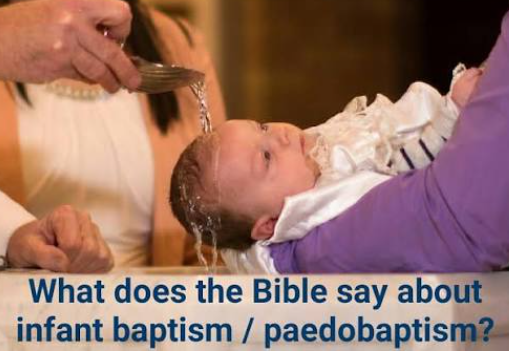
Paedobaptism: Biblical, Historical & Ecclesiological Perspectives
1. The Theological Foundations of Baptism
Baptism is far more than a decorative ritual; it is a critical ecclesiastical mandate that defines the visible boundary between the world and the body of Christ. The question of the "proper subject" of baptism is not a secondary concern but a foundational issue of ecclesiological ontology—it concerns the very nature and being of the church. Because baptism serves as the initial, public identification with Christ, the qualifications of those admitted to the ordinance determine the spiritual purity and integrity of the local congregation.
2. Scriptural Analysis: The Requirement of Believer’s Baptism
A scripturally aligned church must adhere to the "Biblical Order" established in the New Testament, wherein belief invariably precedes baptism. This sequence—the preaching of the Word, the reception of the message by faith, and the subsequent administration of the ordinance—is the primary mechanism for maintaining a regenerate church. By ensuring that baptism is a conscious response to the Gospel, the church avoids the error of treating the ordinance as a passive or involuntary ritual.
New Testament Precedents For Believer Baptism
| Scripture Reference | The Prerequisite Action | The Resulting Baptism |
|---|---|---|
| Acts 8:12 | Believed Philip’s preaching concerning the kingdom of God | Both men and women were baptized |
| Acts 8:36-38 | Believed with "all the heart" that Jesus is the Son of God | The Ethiopian Eunuch was baptized |
| Acts 16:31-34 | Believed on the Lord Jesus; rejoiced, believing in God with all his house | The Philippian jailer and all his household were baptized |
Advocates of paedobaptism frequently lean on the "household baptisms" of Lydia and the Philippian jailer as a primary scriptural defense. However, such arguments rely on silence rather than substance. In the accounts of Lydia Acts 16:15 and the jailer Acts 16:33, the text makes no mention of infants. In the jailer’s case, the narrative explicitly notes that his entire household "rejoiced, believing in God" Act 16:34, an action that necessitates cognitive faith and personal volition. Furthermore, paedobaptists often attempt to "lock" baptism to circumcision based on Colossians 2:11–12. Yet, the Apostle Paul provides a comparison of contrast rather than a direct parallel. He describes a "circumcision made without hands"—a spiritual transformation that puts off the "body of the sins of the flesh" through the "circumcision of Christ." This spiritual reality is fundamentally different from the physical, manual rite of the Old Covenant. Finally, St. Peter defines baptism as the "answer of a good conscience toward God" 1 Peter 3:21. Since an infant cannot exercise a conscience or make a voluntary choice, the practice of infant baptism runs contrary to the scriptural nature of the ordinance.
3. Historical Divergence: From The Early Church To The Third Century
The historical record suggests a sub-apostolic departure from the clarity of the New Testament pattern, leading to systemic ecclesiastical shifts. For the first 150 years of church history, there is no indisputable evidence of infant baptism being practiced. It was not an apostolic tradition but a later historical deviation that initially met with stern resistance.
Infant baptism does not appear in the record until the 3rd century, notably in the writings of Tertullian (AD 200–206), who actively argued against the practice in his treatise on baptism, viewing it as an unwarranted and objectionable innovation. During this same era, variations in the mode of baptism began to emerge. A prominent historical precedent is the 3rd-century "clinic baptism" of Novation in the African churches. Believing he was near death, Novation was "baptized" while in bed; however, even then, the desire to maintain the symbolism of immersion was so strong that he was wrapped in sheets soaked in water to simulate the mode. This highlights that immersion remained the recognized standard. Furthermore, the Eastern, Greek-speaking branches of Christianity have persistently practiced immersion to the present day, acknowledging that the Greek term baptizo literally means "to dip" or "to immerse." Historical deviations from the proper subject and mode of baptism have invariably signaled a decline in institutional spiritual vitality.
4. The "Mixed Multitude": Ecclesiological Consequences of Infant Baptism
The doctrine of "Regenerate Church Membership" is the strategic pillar of a healthy congregation. Infant baptism fundamentally compromises this doctrine by populating the church with individuals who have not experienced the "new birth." This results in a "mixed multitude," a body consisting of both truly saved believers and unregenerate members who entered the community solely through an involuntary ritual.
The structural result of this unbiblical membership is an inevitable theological drift. When unregenerate individuals are granted the rights of membership through infant baptism, they eventually rise to positions of leadership and governance. A sobering example of this is the historical decline of Harvard. Originally established as a Bible college for the training of ministers, Harvard eventually collapsed into theological error because its governing council was comprised of men who were "members" by virtue of their infant baptism, despite lacking a personal conversion experience. When the college’s principal attempted to take a stand for biblical orthodoxy, he was overruled by this council of unregenerate men. This pattern has repeated throughout the history of paedobaptist denominations; when the boundary of the church is breached by the involuntary admission of the unsaved, the institution cannot maintain its doctrinal purity and eventually succumbs to secularization.
5. The Symbolism of Immersion Versus Sprinkling
The strategic importance of maintaining the "symbolic integrity" of baptism cannot be overstated. The mode of baptism is not a matter of cultural convenience but is essential to the Gospel message the ordinance is intended to portray. According to Romans 6:3-5, baptism is a vivid, symbolic picture of the believer’s identification with the death, burial, and resurrection of Jesus Christ.
Immersion is the only mode that adequately captures this reality. As the candidate is lowered into the water, they are symbolically buried in the likeness of Christ’s death; as they are raised, they represent His resurrection to "newness of life." Methods such as sprinkling or pouring are completely inadequate vehicles for this symbolism, as they fail to depict either a burial or a resurrection. To alter the mode is to obscure the message of the Gospel. The use of immersion is an obvious and necessary declaration of faith, and any deviation from it strips the ordinance of its intended communicative power.
6. The Contrast With Credobaptism
Paedobaptism directly contrasts with credobaptism (or believer's baptism). Credobaptists—such as Baptists, brethren, and Pentecostals, they argue that baptism must only follow a personal, conscious profession of faith in Jesus Christ, meaning infants should not be baptized.
The paedobaptist (infant baptism) position operates on a fundamentally different theological framework, often viewing baptism as God's action rather than solely a human declaration.
Here is how the two frameworks contrast across a few key theological dimensions:
The Core Differences
| Aspect | Credobaptism (Believer's Baptism) | Paedobaptism (Infant Baptism) |
|---|---|---|
| Prerequisite | Conscious profession of faith | None (for infants of believing parents) |
| Primary Meaning | A public testimony of personal salvation and obedience. | A sacrament of grace or entry into the covenant community. |
| Theological Lens | Emphasizes the individual's active response to the Gospel. | Emphasizes God's preceding grace and the community of faith. |
| Biblical Precedent | Focuses on New Testament examples of belief preceding baptism. | Often draws parallels to Old Testament circumcision as a covenant sign. |
| Key Traditions | Baptists, Pentecostals, Mennonites, Brethren, non-denominational churches. | Catholics, Orthodox, Anglicans, Presbyterians, Lutherans, Methodists. |
7. Conclusion: Baptism As The Initial Step of Christian Obedience
A biblical and historically grounded ecclesiology recognizes that baptism rests upon four core pillars:
- Proper Subject: Baptism is reserved exclusively for those who have made a credible profession of faith (Believer’s Baptism).
- Proper Mode: The ordinance must be administered by immersion to preserve the symbolic picture of death and resurrection.
- Non-Regenerative Nature: Baptism does not effect salvation; it is a sign of a grace already received.
- Step of Obedience: It is a vital command of Christ that serves as the initial act of discipleship for the believer.
While early figures like Justin Martyr (AD 100–165) began to conflate the rite with the remission of sins through the doctrine of "Baptismal Regeneration," the Scriptures offer a sharp correction. Titus 3:5 affirms that salvation is "not by works of righteousness which we have done," but by the "washing of regeneration and renewing of the Holy Ghost." It is the Spirit of God, not the water of the pool, that grants new life. Furthermore, when St. Peter calls for baptism "for the remission of sins" Acts 2:38, the linguistic nuance suggests baptism because sins have been forgiven, much as one offers a sacrifice for (because of) a cleansing already received. Adhering to the biblical pattern of believer’s baptism preserves the spiritual growth of the individual and ensures that the local church remains a pure and regenerate body, securely founded upon the Word of God.
Also see: