TULIP VS LOTUS
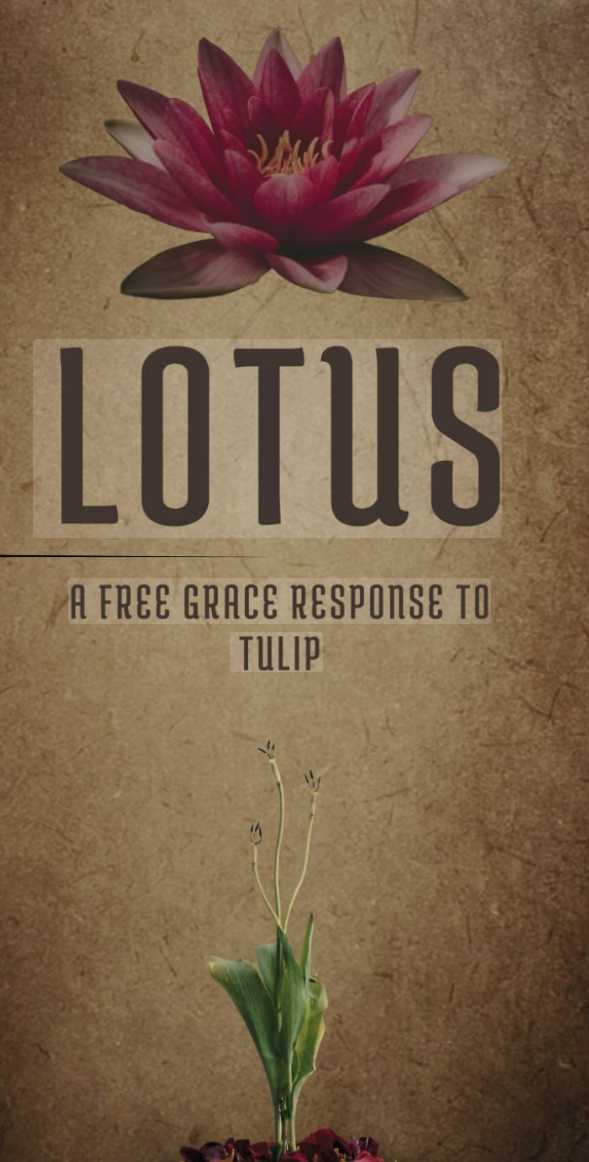
TULIP To LOTUS: A Comparative Analysis of Calvinist & Free Grace Soteriology
The Historical and Theological Framework of TULIP
The discourse surrounding soteriology which is the doctrine of salvation within Protestant Christianity has been profoundly shaped by memorable, albeit sometimes controversial, acronyms. Of these, none is more iconic or influential than TULIP, the five-point summary of Calvinism. To comprehend the emergence of its direct challenger, LOTUS, one must first understand the historical context, theological content, and modern construction of the TULIP framework. It is a system born not of systematic theological summary, but of polemical necessity, a fact that has defined its character and its reception for centuries.
The Canons of Dort and The Remonstrants
The theological tenets now known as the "Five Points of Calvinism" were not proactively formulated by John Calvin or his immediate successors as a comprehensive summary of their faith. Instead, they were a reactive defense against a rising theological challenge in the early 17th-century Netherlands. In 1610, followers of the late Leiden professor Jacob Arminius presented a document to the Dutch Church titled the "Five Articles of Remonstrance." These articles proposed alternative interpretations of established Reformed doctrines concerning predestination, the extent of Christ's atonement, the nature of human depravity, the efficacy of grace, and the security of the believer. This act of "remonstrance" or protest was the catalyst for one of the most significant theological synods in Protestant history.
The Dutch government, seeking to quell the growing unrest and theological division, convened the Synod of Dort (1618-1619). This international assembly of Reformed theologians gathered not to create a new theological system, but to evaluate the five points of the Arminian Remonstrants against Scripture and the existing Reformed confessions. The result was the Canons of Dort, a meticulously crafted document that rejected the Arminian articles point-by-point. Therefore, the "Five Points of Calvinism" are, in their historical origin, the five points of refutation against the five points of Arminianism. This historical reality is critical; the structure and content of what would become TULIP were determined by the specific theological battlegrounds chosen by its opponents. This responsive and polemical genesis explains why certain central pillars of Reformed theology, such as covenant theology or its high view of Scripture, are absent from the five-point summary. The system was not designed to be a complete summary of the Reformed faith, but a specific defense of its soteriology at the points under attack. Even before the Synod, the Reformed response was being formulated, as evidenced by a seven-point "Counter Remonstrance" drafted in 1611.
The Modern Acronym: A 20th-Century Invention
While the doctrines articulated at Dort date to the early 17th century, the TULIP acronym itself is a much more recent development. It is a product of 20th-century, English-speaking evangelicalism, not the Reformation era. There is no evidence that the theologians at Dort or John Calvin himself ever used such a mnemonic device. Historical research traces the origin of the acronym to an address delivered in approximately 1905 by Dr. Cleland Boyd McAfee, a Presbyterian pastor and theologian. The earliest known printed appearance of TULIP is from 1915, in a piece whose author credited McAfee's 1905 address.
The acronym's widespread popularity, however, is largely due to its inclusion in Loraine Boettner's influential 1932 book, The Reformed Doctrine of Predestination. From that point forward, TULIP took on a life of its own, becoming for many the primary, and sometimes sole, definition of what it means to be a Calvinist. This popularization marks a significant shift in theological pedagogy. The use of a simple, memorable acronym made a complex and highly integrated system of thought accessible to a lay audience. However, this very accessibility came with the risk of oversimplification. The mnemonic device, powerful in its simplicity, began to eclipse the more nuanced and comprehensive confessional documents of the Reformed tradition, such as the Westminster Confession of Faith. TULIP became an "iconic" symbol , creating a fixed identity for Calvinism that could be easily taught, defended, and, as the existence of LOTUS demonstrates, attacked with an equally simplistic counter-acronym.
Deconstructing the Five Points of Calvinism (The "Doctrines of Grace")
The five doctrines, often referred to by their proponents as the "Doctrines of Grace" to shift focus from John Calvin to their perceived biblical basis, form a logically interlocking system where each point builds upon the last.
T - Total Depravity (or Total Inability)
This doctrine addresses the state of humanity after the Fall. It asserts that sin has corrupted every aspect of human nature such as the heart, emotions, will, and mind. The term "total" does not mean that every individual is as outwardly evil as they could possibly be in their actions, but rather that sin has completely pervaded their being, leaving no part untouched. The consequence of this state is a spiritual inability. The unregenerate person is not merely spiritually "sick" but is described as spiritually "dead" in sin. Because of this fallen nature, they are neither able nor willing, of their own volition, to submit to God, to believe the gospel, or to take any step toward their own salvation. They are in bondage to sin and naturally hostile to God, thus requiring a divine intervention to be saved.
U - Unconditional Election
Stemming directly from the doctrine of total depravity, unconditional election posits that if humans are unable to choose God, then God must be the one who chooses them. This doctrine states that from eternity past, God, in His sovereign will, chose certain individuals for salvation. This choice, or "election," is not based on any foreseen merit, virtue, or faith in the person chosen. God's decision is "unconditional," grounded not in the qualities of the sinner but solely in His own mercy and good pleasure. He chose to extend mercy to some (the "elect") and to pass over others, leaving them to the just consequences of their sin. This predestination is an act of God's sovereign grace, not a response to human action.
L - Limited Atonement (or Definite/Particular Atonement)
This is perhaps the most controversial of the five points. It addresses the question of the intent and scope of Christ's death on the cross. The doctrine of limited atonement argues that Christ's death was specifically designed to save the elect and only the elect. While the value of Christ's sacrifice is infinite and sufficient to save every person who has ever lived, its efficacy was intended for and applied only to those whom the Father had chosen. The argument is one of divine justice and purpose: if Christ's death legally paid the sin-debt for every individual, then justice would demand that every individual be saved, leading to universalism. Since not all are saved, the atonement must have been definite in its application, securing the salvation of a particular people. Many Reformed theologians prefer the term "Definite Atonement" or "Particular Atonement," feeling that "Limited" is misleading, as it seems to diminish the power or value of Christ's work rather than clarifying its intended scope.
I - Irresistible Grace (or Efficacious Grace)
This point follows logically from the previous three. If God has unconditionally elected a particular people and Christ has died to save them specifically, then the application of that salvation must be certain. Irresistible grace, also called "efficacious grace," teaches that when God extends His saving call to the elect, it is always effective. The Holy Spirit works internally in the heart of the elect sinner, regenerating them and changing their rebellious nature. This is not a violation of the human will, as if God were dragging an unwilling person into the kingdom. Rather, the Spirit changes the person's desires so that they willingly and freely come to Christ. The external call of the gospel can be, and often is, resisted by all. But the internal, regenerative call of the Spirit to the elect cannot be ultimately thwarted; it "graciously causes the elect sinner to cooperate, to believe, to repent".
P - Perseverance of the Saints
The final point provides assurance based on the preceding four. If salvation is entirely a work of God's sovereign grace, from election to regeneration to justification, then it cannot be lost by human failure. The doctrine of perseverance of the saints holds that all those who are truly regenerated and saved by God will be preserved by His power and will persevere in faith until the end of their lives. This does not mean they will be sinless, but that God's sanctifying work in them will continue, and they will not ultimately or finally fall away from the faith. Their perseverance is not the condition of their salvation but the evidence of it. Because their security rests in God's unchanging will and preserving power, their salvation is eternal and cannot be thwarted.
The Emergence of Free Grace Theology
In the landscape of American evangelicalism, the latter half of the 20th century saw the intensification of a debate that, while related to the classic Calvinist-Arminian controversy, focused on a different axis of contention: the very nature of saving faith. It was out of this context that Free Grace theology emerged as a distinct and systematized movement, positioning itself as a "third way" that sought to correct what it perceived as errors in both dominant soteriological systems.
A Response to Lordship Salvation
The modern Free Grace movement was largely systematized in the 1980s through the work of theologians at Dallas Theological Seminary, most notably Charles Ryrie and Zane Hodges. While its roots can be traced to earlier streams of Dispensationalist and traditional Baptist thought, its modern formulation was primarily a direct response to the teachings of "Lordship Salvation". Lordship Salvation, often associated with Reformed thinkers like John MacArthur, argues that saving faith is more than mere intellectual assent to the facts of the gospel. It necessarily includes submission to the lordship of Christ, a willingness to turn from sin (repentance), and a life that will inevitably produce the fruit of good works.
Free Grace proponents viewed this as a dangerous conflation of the requirements for justification (receiving eternal life) with the requirements for sanctification (the process of becoming more like Christ). They argued that by including submission, repentance from sin, and the promise of future works as part of the saving message, Lordship Salvation was, in effect, adding human works to the gospel and thereby corrupting the principle of salvation by grace through faith alone. This perceived failure of the traditional Calvinist-Arminian debate to adequately guard the "freeness" of grace created a theological space for a new system. Free Grace sought to affirm the eternal security of the believer (a doctrine shared with Calvinism) while simultaneously rejecting the perceived works-based requirements of Lordship Salvation, creating a unique theological position.
Core Tenets of the Free Grace Position
The central organizing principle that drives the entire Free Grace system is the radical, unconditional freeness of the gift of salvation. Every other doctrine within the system flows from a rigorous application of this principle to the moment of justification.
-
The Singular Condition of Faith: The foundational tenet of Free Grace theology is that the sole and singular condition for receiving the free gift of eternal life is faith and faith alone in Jesus Christ for that gift. Faith is typically defined as being persuaded that the promise of the gospel is true, a "onetime mental assent to the proposition that Jesus is Savior". Any other requirement, whether it be baptism, turning from sin, a commitment to obey, or perseverance in good works, is considered a human work added to the gospel and is therefore excluded from the condition for justification.
-
Absolute Assurance: A direct consequence of this singular condition is the doctrine of absolute assurance. Because a person's eternal salvation depends only on the objective promise of God in His Word and their one-time act of believing that promise, they can and should have 100% assurance of their salvation from the very moment they believe. In this view, assurance is not based on subjective introspection, the evidence of a changed life, or the presence of good works, which are seen as unstable and human-centered grounds. Instead, assurance rests entirely on the unchanging character and promise of God.
-
Distinction between Salvation and Discipleship: Free Grace theology makes a sharp and critical distinction between salvation and discipleship, or between "entering" the kingdom of God and "inheriting" the kingdom. "Entering" the kingdom refers to receiving eternal life, which is secured by faith alone. "Inheriting" the kingdom refers to receiving eternal rewards, ruling with Christ, and experiencing a richer spiritual life, which is contingent upon a believer's post-conversion life of discipleship, obedience, and good works. This allows for the category of the "carnal Christian" who is a person who is genuinely saved and possesses eternal life but who lives a life indistinguishable from an unbeliever. Such a person, according to Free Grace teaching, will face divine discipline in this life and a loss of rewards in the next, but will not forfeit their eternal salvation.
-
Preservation, Not Perseverance: This distinction leads to a redefinition of the final point of the Calvinist acronym. Free Grace affirms the preservation of the saints (also known as eternal security), meaning God's power preserves the believer and guarantees their eternal life, regardless of their actions. However, it explicitly denies the necessary perseverance of the saints. In this view, a truly born-again individual can fall into prolonged and grievous sin, abandon their faith intellectually (apostasy), or even deny Christ without losing the gift of eternal life they received at the moment of faith. Perseverance in faith and good works is a matter of discipleship and rewards, not salvation.
LOTUS : A Point-For-Point Counterargument
The development of the LOTUS acronym represents a strategic and deliberate effort by the Free Grace movement to move from a defensive posture (reacting against Lordship Salvation) to a proactive one. By creating a memorable, systematic framework that directly mirrors and sequentially counters the world-renowned TULIP acronym, proponents of Free Grace aim to present a complete, alternative soteriology on an equal footing in the theological marketplace of ideas. This is more than a simple refutation; it is an act of theological branding designed to provide a coherent identity for those who feel they fit neither the Calvinist nor the Arminian mold.
The following table provides a clear, comparative overview of the two systems, mapping the direct, one-to-one opposition that LOTUS was designed to articulate. This structure serves as a conceptual guide for the detailed analysis of each point that follows.
| Point | TULIP (Calvinism) | LOTUS (Free Grace) | Core Disagreement |
|---|---|---|---|
| 1 | T - Total Depravity | L - Liable Depravity | The nature and extent of human inability. |
| 2 | U - Unconditional Election | O - Occupational Election | The purpose and basis of divine election. |
| 3 | L - Limited Atonement | T - Total Atonement | The scope and intent of Christ's death. |
| 4 | I - Irresistible Grace | U - Unlimited Grace | The nature of God's saving grace and human response. |
| 5 | P - Perseverance of the Saints | S - Security of the Saints | The relationship between salvation and a believer's ongoing life. |
T vs. L: Total Depravity vs. Liable Depravity
The entire edifice of both TULIP and LOTUS rests upon their respective first points. The disagreement here is the foundational premise from which all other soteriological conclusions are drawn.
-
Calvinist Position (T): As previously established, Total Depravity holds that fallen humanity is spiritually dead, in bondage to sin, and utterly incapable of initiating or contributing to their own salvation. The human will is not free in the sense of being neutral; it is actively inclined toward rebellion and away from God.
-
Free Grace Response (L): "Liable Depravity" presents a more nuanced view of the fall's effects. This tenet affirms that all people are sinners and are therefore liable for their own sin before a holy God. However, it denies that this depravity has rendered them incapable of responding positively to the gospel. While sinful, the unregenerate person retains the capacity to understand the gospel message and to make a free and genuine choice to believe in Jesus Christ for eternal life. The will is not so bound that it cannot choose to accept a free gift.
U vs. O: Unconditional Election vs. Occupational Election
The second point of each system flows directly from the first. The nature of human ability dictates the nature of divine election.
-
Calvinist Position (U): Because humanity is totally depraved and unable to choose God, salvation must be initiated by God's sovereign choice. Unconditional Election means God chooses specific individuals unto salvation from eternity past, based not on anything in them but solely on His own mysterious and merciful will.
-
Free Grace Response (O): If humans are only "liably depraved" and retain the ability to believe, then election unto salvation becomes unnecessary and, in their view, contrary to the universal offer of the gospel. "Occupational Election" therefore redefines the biblical concept of election. It argues that when the Bible speaks of election, it is never referring to God pre-selecting individuals for eternal life. Instead, election is always for a specific purpose, task, or role, an "occupation." Examples include the election of Israel for a national purpose, the election of David as king, or the election of the apostles for service. Salvation itself is not a matter of election but is available to "whosoever believeth" according to John 3:16.
L vs. T: Limited Atonement vs. Total Atonement
The purpose of Christ's death is understood differently depending on who it was intended to save.
-
Calvinist Position (L): Consistent with the election of a particular people, Limited Atonement holds that Christ's death was designed to be substitutionary and efficacious for the elect alone. It did not merely make salvation possible, but actually secured it for all whom the Father had chosen.
-
Free Grace Response (T): If salvation is available to every person who chooses to believe, then the provision for that salvation must also be available to every person. "Total Atonement" (more commonly known as Unlimited Atonement) asserts that the death of Jesus Christ was sufficient to pay for the sins of the entire world, without exception. Christ's sacrifice made salvation possible for every individual, removing the legal barrier of sin for all humanity. This provision becomes effective for the individual only when they believe. This position aligns with so-called "four-point Calvinists" and other non-Calvinist systems.
I vs. U: Irresistible Grace vs. Unlimited Grace
The nature of God's saving grace is the next logical point of divergence.
-
Calvinist Position (I): Irresistible Grace is the necessary application of the definite atonement to the elect. God's internal call through the Holy Spirit is efficacious; it regenerates the sinner's heart, changes their will, and unfailingly draws them to faith in Christ. This grace cannot be ultimately or finally resisted by those for whom it is intended.
-
Free Grace Response (U): "Unlimited Grace" posits that God's grace is extended to all people. This grace is not coercive or irresistible in a saving sense. It makes the gospel offer a genuine one for every person and enables them to make a free choice. However, this saving grace can be either received or rejected by an act of the human will. The decision ultimately rests with the individual.
P vs. S: Perseverance of the Saints vs. Security of the Saints
The final point addresses the permanence of salvation and its relationship to the believer's life. This is the crucial point of conflict between Free Grace and Lordship Salvation.
-
Calvinist Position (P): Perseverance of the Saints teaches that those whom God has saved will inevitably be kept by His power and will persevere in a life of faith and repentance. Good works and continued faith are the necessary fruit and evidence of a true, saving regeneration. One cannot be a true Christian and live a life of final, unrepentant apostasy.
-
Free Grace Response (S): "Security of the Saints" radically separates the guarantee of salvation from the believer's subsequent performance. A person is eternally secure from the moment of faith because their salvation rests on God's power and promise, not their own ability to persevere. While perseverance in holiness is desirable and leads to rewards, it is not guaranteed and is not a condition for maintaining salvation. A genuinely saved person can fail to persevere, live a carnal life, and even fall away from the faith, yet remain eternally secure.
The logical coherence of the LOTUS system is thus revealed. It is not merely a collection of disconnected objections to TULIP. Rather, each point logically necessitates the next, creating an integrated soteriological framework. The entire structure is predicated on the initial premise of Liable Depravity. If a person retains the ability to believe, then God's election cannot be Unconditional for salvation but must be Occupational for service. If salvation is genuinely offered to all who might choose it, then Christ's atonement must be Total in its provision. Consequently, God's saving grace must be offered Unlimitedly and can be resisted. Finally, if salvation is granted based on a single, non-meritorious act of faith, its permanence must depend solely on God's promise (Security), not on the believer's subsequent, and potentially flawed, performance
(Perseverance).
The Foundational Disagreement: Divine Sovereignty & Human Volition
Beneath the point-for-point debate encapsulated by the TULIP and LOTUS acronyms lies a much deeper and more ancient philosophical and theological tension: the relationship between divine sovereignty and human volition. The two systems operate with fundamentally different models of how God's will and human choice interact, particularly in the moment of conversion. This core disagreement is the engine that drives their divergent conclusions on every other point of soteriology. The entire TULIP vs. LOTUS debate can be understood as a modern manifestation of the centuries-old conflict between Augustinian and Semi-Pelagian conceptions of the human will, recast in the vernacular of contemporary American evangelicalism.
The Calvinist View (Compatibilism)
Calvinist theology resolves the apparent paradox of divine sovereignty and human freedom through a philosophical concept known as compatibilism. This view holds that God's absolute, meticulous sovereignty over all events is perfectly compatible with human responsibility and meaningful choice. A human choice is considered "free" not because it is uncaused or because the person could have done otherwise (libertarian freedom), but because the choice is voluntary and consistent with the person's own desires and nature.
Applied to salvation, this means the unregenerate person, whose nature is fallen and hostile to God, freely chooses to reject God because that is what their rebellious heart desires. They are not coerced into sin by an external force; they act according to their own will, which is in bondage to sin. God's act of "irresistible grace" is not, therefore, an act of coercion that violates a free will. Instead, it is a sovereign act of regeneration that changes the person's underlying nature. God gives them a "new heart" with new desires. As a result of this internal transformation, the person now freely and willingly chooses to believe in Christ, because that is what their new, regenerated nature desires. In this framework, God sovereignly determines and guarantees the outcome of salvation for the elect, while the human being acts voluntarily and is held responsible for their choices at every stage.
The Free Grace View (Libertarian/Free Will)
Free Grace theology, in contrast, operates on a model that presupposes libertarian free will at the point of salvation. This model asserts that for a choice to be truly free and meaningful, the agent must have the ability to choose between two or more genuine possibilities; they could have done otherwise. In this view, the fallenness of humanity ("Liable Depravity") has not completely destroyed this capacity. The human will, while affected by sin, is not so in bondage that it cannot make a contrary choice when presented with the gospel message.
According to this perspective, God's sovereignty is expressed in His gracious plan of salvation. He sovereignly initiated the plan, sent His only begotten Son to provide a "Total Atonement" for all, and sends the Holy Spirit to convict the world of sin and make the gospel understandable. However, the final, decisive act of accepting or rejecting this free gift rests with the unimpeded, libertarian choice of the individual. The Calvinist model of compatibilism is seen as a form of divine determinism that ultimately negates genuine human choice and responsibility in the matter of salvation. If God sovereignly changes the nature to guarantee the choice, then, in their view, the choice is not truly free in a meaningful sense.
Re-examining Predestination and Foreknowledge
These competing models of will and sovereignty lead to vastly different interpretations of key biblical passages dealing with predestination and election.
-
Calvinist Interpretation: Passages such as Ephesians 1:4-5 "According as he hath chosen us in him before the foundation of the world, that we should be holy and without blame before him in love: Having predestinated us unto the adoption of children by Jesus Christ to himself, according to the good pleasure of his will," and Romans 9:16 "So then it is not of him that willeth, nor of him that runneth, but of God that sheweth mercy." are interpreted as teaching God's active, sovereign, and unconditional pre-determination of which specific individuals would be saved. Foreknowledge in passages like Romans 8:29 "For whom he did foreknow, he also did predestinate to be conformed to the image of his Son, that he might be the firstborn among many brethren." is understood not as God merely looking into the future to see who would believe, but as a relational foreknowledge, a "fore-loving" or setting of His affection upon a people before time began.
-
Free Grace Interpretation: Proponents of Free Grace typically interpret such passages differently. They argue that "predestination" does not refer to the pre-selection of individuals for salvation, but rather to God's pre-determined plan for those who become believers. For example, God predestined that all who believe in Christ would be conformed to His image, adopted as sons, and glorified. The "who" is determined by individual faith, while the "what" is predestined by God. Election is often interpreted corporately (God chose a people, the Church) or occupationally (for service), but not individually for salvation, which remains open to all through faith in God.
This fundamental disagreement over the state of the human will after the Fall places the modern TULIP vs. LOTUS debate squarely in the lineage of the historical conflict between Augustine of Hippo and his opponents. Augustine's doctrine of the will's bondage to sin and the absolute necessity of God's initiating, prevenient grace laid the foundation for the later Reformed (and TULIP) position. The Semi-Pelagian view, which argued that the fallen human will, while weakened, retained the ability to take the first step toward God, is the historical antecedent to the Free Grace (and LOTUS) position on the will's capacity to "choose to believe".
Contemporary Debates & Critiques
The theological systems represented by TULIP and LOTUS are not abstract historical artifacts; they are vibrant, competing frameworks that generate significant contemporary debate. The discourse is often characterized by pointed critiques and robust defenses, with each side accusing the other of distorting the biblical gospel. A central feature of this debate is a "dialogue of the deaf," where both sides often operate from such fundamentally different definitions of key theological terms such as "faith," "repentance," and "salvation" that they frequently talk past one another, leading to accusations that seem incomprehensible to the opposing camp.
Critiques of Free Grace Theology (and by extension, LOTUS)
The Free Grace system, with its sharp distinctions and radical claims about the freeness of salvation, has drawn intense criticism from Reformed, Lordship Salvation, and other evangelical quarters.
-
Accusation of Antinomianism ("Easy Believism"): The most persistent and forceful critique leveled against Free Grace theology is that it promotes antinomianism—the belief that a Christian is under no obligation to obey the moral law of God. By severing any necessary link between saving faith and a transformed life, critics argue that Free Grace creates a system where a person can make a one-time profession of faith and then live a life of unrepentant, egregious sin such as adultery, theft, even apostasy, while still claiming to be saved and eternally secure. This is often pejoratively labeled "easy believism" or "cheap grace," as it is seen to cheapen the sacrifice of Christ by removing the call to discipleship and holiness from the core of the Christian identity.
-
False Assurance: Prominent critics, such as theologian Wayne Grudem, argue that a major danger of the Free Grace position is that it gives false assurance of salvation to multitudes who may not be genuinely saved. If saving faith is merely intellectual assent without the regenerating work of the Holy Spirit that necessarily produces the fruit of repentance and good works, then many people who have made a simple "decision" for Christ but whose lives remain unchanged are being dangerously misled into believing they are secure when they may, in fact, be unregenerate.
-
Misunderstanding of Faith and Repentance: Opponents contend that Free Grace fundamentally misunderstands and redefines the biblical concepts of faith and repentance. They argue that biblical faith (pistis) is not merely intellectual agreement with facts but involves trust, reliance, and submission. By reducing faith to "little more than a onetime mental assent," Free Grace is seen as promoting a sub-biblical, sterile version of belief. Similarly, they argue that biblical repentance (metanoia) is more than a simple "change of mind" about who Jesus is; it inherently involves a turning from sin and a reorientation of one's life toward God. By stripping repentance of this moral and volitional component, Free Grace is accused of preaching a gospel devoid of a crucial element.
-
Unbiblical Interpretations: To sustain its theological system, critics claim that Free Grace theology is forced to adopt "strained," "unlikely," or novel interpretations of numerous key scriptural passages. The book of James, particularly James 2:17 "Even so faith, if it hath not works, is dead, being alone." is a primary battleground. Critics argue that Free Grace proponents must engage in exegetical gymnastics to avoid the plain meaning of such texts, which seem to inextricably link true saving faith with a life of active obedience.
The Free Grace Defense
Proponents of Free Grace theology are well aware of these critiques and have developed robust defenses, often turning the accusations back on their critics.
-
Refuting Antinomianism: Free Grace advocates vehemently deny that their theology promotes a license to sin. They argue that their critics systematically conflate justification (being declared righteous) with sanctification (the process of becoming holy). While good works and obedience are not conditions for receiving eternal life, they are absolutely central to the Christian life of discipleship, fellowship with God, avoiding divine discipline, and earning eternal rewards. They contend that the motivation for holiness should be gratitude and the desire for rewards, not the fear of losing salvation.
-
Defending Assurance: They counter that it is the Lordship/Reformed view that leads to a lack of assurance. If assurance is based on the subjective evidence of one's own works and perseverance, it can never be absolute, as one can never be certain they have done enough. Free Grace argues that true, stable assurance can only be based on the objective, external promise of God in Scripture, which declares in John 3:16 "For God so loved the world, that he gave his only begotten Son, that whosoever believeth in him should not perish, but have everlasting life".
-
Clarifying Faith: Proponents defend their definition of faith as mental assent by arguing it is the only definition that truly preserves salvation by grace alone. To add elements like commitment, submission, or a willingness to obey into the definition of saving faith is, in their view, to subtly reintroduce works as a condition for salvation. They argue that while Lordship advocates accuse them of "lowering the bar" for salvation, the gospel truth is that Jesus "took the bar away" entirely, offering eternal life as a truly free gift received by simple belief.
-
Response to Critics: Free Grace theologians have published direct responses to their critics. For instance, in response to Wayne Grudem's book, they argue that it is actually the Reformed/Lordship position that "diminishes the gospel" by making its assurance contingent upon human performance, thereby detracting from the sufficiency of Christ's work and the freeness of God's grace.
Critiques of the TULIP Framework
The TULIP system is not without its own set of significant critiques, coming from both outside and inside the Reformed tradition.
-
Theological Reductionism: A growing number of Reformed scholars themselves express discomfort with TULIP, arguing that it is a narrow and reductionistic summary of their faith. They contend that the acronym, born of polemics and popularized in the 20th century, flattens the rich, organic, and comprehensive theology found in the great Reformed confessions. It isolates five soteriological points from their broader context in covenant theology, ecclesiology (the doctrine of the church), sacramentology (the theological study of Christian sacraments), and a robust vision for cultural engagement, potentially presenting a caricature of the Reformed tradition.
-
Misleading Terminology: As noted earlier, even many who affirm the doctrines find the specific terms of the acronym to be unhelpful and prone to misinterpretation. "Limited Atonement" can sound as if Christ's power was limited, and "Irresistible Grace" can conjure images of a coercive God violating human will, interpretations that proponents spend considerable time correcting.
-
Pastoral and Evangelistic Problems: From outside the system, a primary critique is that the doctrines of Unconditional Election and Limited Atonement create significant pastoral and evangelistic challenges. The concept of "double predestination" the logical inference that if God actively chooses some for salvation, He necessarily also chooses (or at least passes over) the rest for damnation which is seen by many as portraying God as arbitrary or unloving, a "downer" that is difficult to reconcile with the biblical presentation of a God who desires all to be saved and God is love. This can also create a perceived tension in evangelism: how can one genuinely offer the gospel to all people if it is not, in fact, intended for or available to all people?
Conclusion - The Role of Acronyms In Theological Discourse
The theological chasm between the systems represented by TULIP and LOTUS is profound and, at its core, irreconcilable. They begin from different anthropological starting points such as a will in complete bondage versus a will capable of belief and this foundational difference logically unfolds into two entirely distinct, albeit internally coherent, soteriological structures. TULIP presents a vision of salvation that is entirely monergistic, a sovereign work of God from beginning to end, in which the human role is that of a willing recipient whose very willingness is a gift of grace. LOTUS, conversely, presents a synergistic vision at the point of justification, where God provides salvation for all and the individual's free choice to believe is the decisive factor that appropriates this universal provision.
The Utility and Peril of Theological Shorthand
The very existence of this debate, framed as TULIP versus LOTUS, highlights a broader phenomenon in modern theological discourse: the increasing reliance on acronyms and other forms of theological shorthand. On one hand, such mnemonic devices have undeniable utility. They serve to codify, simplify, and popularize complex doctrinal systems, making them accessible for teaching, memorization, and debate. TULIP became an extraordinarily effective "brand" for Calvinism, allowing its core tenets to be communicated with ease and clarity. The creation of LOTUS is a testament to this power, as its proponents seek to achieve the same level of accessibility and ideological coherence for Free Grace theology.
On the other hand, this reliance carries significant peril. These acronyms can easily become ideological flags or tribal markers, fostering division and simplifying nuanced positions into easily digestible and easily dismissible caricatures. When an acronym becomes the primary definition of a theological tradition, it risks flattening that tradition, elevating a few select points above all others and making the mnemonic device itself, rather than Scripture or the historic confessions, the ultimate standard of orthodoxy. The intricate tapestry of a theological worldview can be reduced to a five-letter word, hindering deeper understanding and encouraging a polemical rather than a reflective posture.
The Symbolic Choice of "LOTUS"
The choice of the lotus flower as the symbol for this Free Grace acronym was intentional. Its proponents invest it with Christian symbolism, pointing to how the lotus rises pure and beautiful from murky waters, representing the new birth of a believer emerging from the world of sin. Its daily cycle of closing at night and reopening to the sun in the morning is used as a metaphor for being born again and for God's mercies being new every morning.
Ultimately, the TULIP versus LOTUS debate is more than a mere disagreement over points of doctrine. It is a compelling case study in the "branding" and "marketing" of theological systems. It reveals a dynamic where competing truth claims are packaged into memorable, oppositional frameworks, complete with their own symbols and media ecosystems. This reflects a landscape where theological movements must not only articulate their positions but also strategically define themselves in a crowded and competitive marketplace of ideas, where the power of a simple acronym can sometimes rival that of a lengthy confession.
Also see: