TULIP VS FACTS
A Critical Examination of TULIP: An Analysis of Opposing Scriptures & Pastoral Concerns
I. Introduction: Framing the Debate on Divine Sovereignty & Human Responsibility
The doctrines of grace, often summarized by the five points of Calvinism, represent one of the most significant and enduring theological debates within Protestant Christianity. These doctrines, concerning the nature of God's work in salvation, touch upon the most profound questions of divine sovereignty, human free will, the character of God, and the assurance of the believer. It is a debate with deep pastoral and existential implications, shaping a believer's understanding of God, self, and the very nature of the gospel. Let go through an exhaustive analysis of the biblical and theological arguments advanced against the five points of Calvinism, exploring the scriptural passages that challenge its tenets and examining the pastoral concerns that arise from its systematic conclusions.
The Historical Genesis: From the Reformation to the Synod of Dort
While often associated with the French Reformer John Calvin (1509-1564), the theological system known as Calvinism has roots extending back to the work of Augustine of Hippo in the 4th and 5th centuries. However, the specific formulation of the "five points" arose not as a proactive summary of Calvin's theology but as a reactive defense against a theological challenge. In 1610, followers of the Dutch theologian Jacobus Arminius (1560-1609) presented a document known as the "Five Articles of Remonstrance" to the Dutch Church. These articles articulated a different understanding of salvation, emphasizing conditional election, universal atonement, and the resistibility of grace.
In response, the Dutch Reformed Church convened the Synod of Dort (1618-1619). The canons produced by this synod were structured to refute the five Arminian articles, point by point. These "Heads of Doctrine" from the Canons of Dort form the basis for what would later be popularly summarized by the English acrostic TULIP. This historical context is crucial; TULIP was forged in the crucible of theological controversy, designed specifically to counter the Arminian system.
An Overview of the Two Systems: The Interlocking Logic of TULIP and FACTS
The debate is best understood by comparing the two interlocking theological systems. The five points of Calvinism are logically interdependent; proponents often argue that to remove one "petal" of the TULIP is to cause the entire system to fall into "absurdity and contradiction". Likewise, the Arminian alternative presents a coherent, contrasting soteriology.
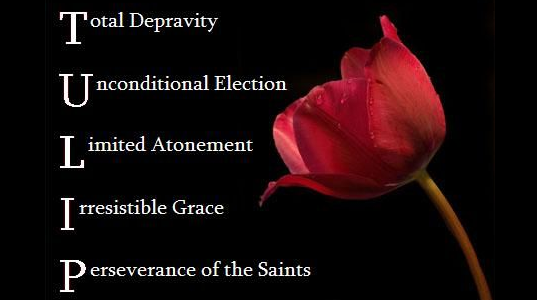
The Calvinist system, summarized by TULIP, posits the following :
-
T - Total Depravity: As a result of the fall, humanity is spiritually dead, corrupted in every part of its nature, and morally unable to choose or seek God.
-
U - Unconditional Election: From eternity, God chose certain individuals for salvation based solely on His own sovereign mercy and will, not on any foreseen faith or merit in them.
-
L - Limited Atonement: Christ's death was specifically intended to, and actually did, save only the elect.
-
I - Irresistible Grace: Those whom God has elected, He draws to salvation through an internal call of the Holy Spirit that is always effective and cannot be ultimately resisted.
-
P - Perseverance of the Saints: All who are truly saved are kept by God's power and will persevere in faith until the end.
The Arminian system, sometimes summarized by the acrostic FACTS, offers a direct counterpoint to each tenet :
-
F - Freed by Grace (to Believe): While humanity is totally depraved, God extends prevenient (preceding) grace to all people, freeing their wills and enabling them to respond to the gospel in faith.
-
A - Atonement for All: Christ's death was for every person, providing a means of salvation for the entire world, though it is effective only for those who believe.
-
C - Conditional Election: God's election of individuals to salvation is conditioned upon His foreknowledge of who would freely choose to have faith in Christ.
-
T - Total Depravity: Like Calvinists, Arminians affirm that humanity is fallen and unable to save itself or initiate a relationship with God apart from divine grace.
-
S - Security in Christ: Believers are secure in their salvation as long as they remain in Christ through faith. Most Arminians hold that it is possible for a true believer to forsake their faith and lose their salvation.
Understanding the Central Tension: Defining the "Dangerous" Implications
The core of the debate, and the source of the perceived "danger," is not merely about differing interpretations of isolated verses. It is a profound conflict over the character of God. The entire TULIP debate can be seen as a proxy war over God's fundamental nature and His disposition toward humanity. Is God's primary attribute in salvation His absolute sovereignty and right to choose whom He will, a view Calvinism emphasizes? Or is it His universal love and desire for all to be saved, a view Arminianism champions?
Every exegetical dispute, whether over the meaning of "world" in John 3:16 or "foreknowledge" in Romans 8 is ultimately a battle to define the character of God. The "dangerous" implications arise when one system's conclusions appear to contradict what the other system holds as essential truths about God's goodness, justice, and love. Critics of Calvinism argue that its logical end is a God who is the author of sin and evil, who creates most of humanity for the express purpose of damnation, and who makes a disingenuous offer of salvation to those for whom no salvation is possible. These are the grave pastoral concerns that animate the opposition to TULIP and form the central focus of this analysis.
Table 1: Comparative Overview of Calvinist and Arminian Soteriology
| TULIP Point | Calvinist Definition | Arminian Counterpart (FACTS) | Arminian Definition |
|---|---|---|---|
| Total Depravity | As a result of the fall, every person is enslaved to sin and is morally unable to choose to trust God for salvation. | Total Depravity | Sin has affected every part of human nature, rendering people unable to save themselves or even believe the gospel apart from God's initiating grace. |
| Unconditional Election | God's choice of certain individuals for salvation is based solely on His own mercy and sovereign will, not on any foreseen faith or merit. | Conditional Election | God chooses for salvation those whom He foreknows will respond in faith to the gospel offer. The choice is conditioned on foreseen faith. |
| Limited Atonement | Christ's substitutionary death was definite in its purpose and effect, atoning only for the sins of the elect. | Atonement for All | Christ's death was for all people, making salvation possible for everyone. Its benefits are effective only for those who believe. |
| Irresistible Grace | The saving grace of God is effectually applied to the elect, overcoming their resistance and inevitably bringing them to faith. | Freed by Grace (to Believe) | God's "prevenient" grace is extended to all, enabling them to freely choose or reject the gospel. This grace is resistible. |
| Perseverance of the Saints | Those whom God has elected and called will be preserved in faith until the end and cannot ultimately lose their salvation. | Security in Christ | Believers are kept secure by God as long as they maintain their faith in Christ. Most Arminians believe it is possible to forsake faith and perish. |
II. Total Depravity: The Nature of Human Inability & Moral Responsibility
The doctrine of Total Depravity forms the foundation upon which the entire TULIP structure is built. While the term itself is affirmed by both Calvinists and classical Arminians, the specific implications drawn from it create the initial and most crucial point of divergence between the two systems. The debate is not over whether humanity is fallen, but over the extent to which that fall incapacitates the human will in relation to salvation.
Doctrinal Analysis: Distinguishing Total Depravity from Total Inability
Both theological traditions agree that as a consequence of Adam's sin, human nature is pervasively corrupted. This is Total Depravity. It does not mean that every person is as evil as they could possibly be in their actions, but that sin has affected every part of their being such as mind, emotions, and will, leaving them spiritually estranged from God and inclined toward evil. Both sides agree that, left to themselves, humans are unable to merit salvation or initiate a saving relationship with God.
The critical distinction arises with the Calvinist doctrine of Total Inability. This doctrine asserts that the unregenerate person is not merely sick or wounded by sin, but spiritually according to Ephesians 2:1: "And you hath he quickened, who were dead in trespasses and sins;". In this state, they are morally unable to perform any spiritual good, including exercising saving faith or even genuinely desiring to come to Christ. From this perspective, faith is not something a dead person can produce; therefore, God must first act monergistically (working alone) to regenerate the sinner, making them spiritually alive before they can believe. Regeneration precedes faith.
This single point that is the sequence of regeneration and faith is the lynchpin of the entire soteriological debate. If a person is spiritually dead and unable to believe until God regenerates them, then it follows that this regenerating grace must be applied only to some (Unconditional Election), that Christ's death must have been intended only for them (Limited Atonement), that this grace must be effective (Irresistible Grace), and that it must be permanent (Perseverance of the Saints).
In contrast, the Arminian system introduces the doctrine of prevenient grace. This is a grace that "goes before" a person's response. Arminians argue that God, through the universal work of the Holy Spirit, graciously counteracts the effects of total depravity to a degree, restoring to all who hear the gospel the freedom of will to either accept or reject the offer of salvation. This grace does not save, but it makes a positive response possible. In this model, faith (enabled by grace) precedes regeneration. God's grace enables a person to believe, and upon their belief, God regenerates them. This framework allows for a synergistic (cooperative) model of conversion, where God initiates and enables, and the human person responds.
The Biblical Counter-Argument: Examining Scriptural Calls to Repentance and Choice
Opponents of Total Inability argue that the Bible is filled with commands, invitations, and exhortations that presuppose a person's ability to respond. If humans are utterly incapable of choosing God, these passages seem hollow or even disingenuous. The argument is that a command implies the ability to obey.
Key passages cited to support this view include:
-
Joshua 24:15: "And if it seem evil unto you to serve the LORD, choose you this day whom ye will serve; whether the gods which your fathers served that were on the other side of the flood, or the gods of the Amorites, in whose land ye dwell: but as for me and my house, we will serve the LORD." This direct command to choose is presented as a genuine decision point for the people of Israel.
-
Deuteronomy 30:19: "I call heaven and earth to record this day against you, that I have set before you life and death, blessing and cursing: therefore choose life, that both thou and thy seed may live:" The command to "choose life" suggests that the choice is real and possible for the hearers.
-
Acts 17:30: "And the times of this ignorance God winked at; but now commandeth all men every where to repent:" A universal command to repent seems to imply a universal ability to repent.
-
Matthew 11:28: "Come unto me, all ye that labour and are heavy laden, and I will give you rest." Jesus's open invitation is extended to "all," not just a pre-selected group, suggesting that all who hear are capable of coming.
-
Revelation 22:17: "And the Spirit and the bride say, Come. And let him that heareth say, Come. And let him that is athirst come. And whosoever will, let him take the water of life freely." The invitation is to "whosoever will, let him take the water of life freely" implying that the human will and desire are active components in receiving salvation.
From the non-Calvinist perspective, these verses demonstrate that while humanity is fallen and requires God's drawing grace, the will is not so bound that it is incapable of responding to that grace. The responsibility to choose is placed squarely on the individual.
Theological Critique: The Impasse of Free Will and Divine Justice
The doctrine of Total Inability raises profound theological and philosophical questions about justice and responsibility. If a person is born with a sinful nature they did not choose, and this nature renders them morally unable to believe the gospel, on what basis can a just God hold them accountable for their unbelief? The critique is that this system seems to make God responsible for damnation. He creates individuals with an inability to believe and then condemns them for not believing, while sovereignly withholding from them the very grace that would enable them to believe.
Proponents of Calvinism respond by drawing a distinction between physical inability and moral inability. A person is not physically restrained from believing, like a man chained to a chair who is commanded to stand. Rather, their inability is moral: they are so in love with their sin and so hostile to God that they will not come to Christ. They freely choose what their sinful nature desires. In this view, their unwillingness is the very essence of their guilt.
However, critics argue that this is a distinction without a meaningful difference if the sinful nature and its desires are themselves predetermined or inherited without any possibility of recourse. If the will is only "free" to choose according to a nature that is itself in bondage to sin, the ultimate responsibility still seems to trace back to the one who ordained that state of affairs.
Pastoral Ramifications: Impact on Human Responsibility and the Nature of Sin
The "dangerous" aspect of Total Inability, from a pastoral standpoint, is its potential to undermine a robust sense of human responsibility and lead to a form of spiritual fatalism. If one's inability to believe is absolute, then personal responsibility for unbelief can feel diminished. Sin may come to be seen less as a series of culpable choices and more as an unavoidable expression of a fixed nature. This can complicate pastoral calls for genuine repentance, as it raises the question of whether a person is truly able to repent or must simply wait for a sovereign, regenerating work of God over which they have no influence.
Furthermore, it can create a pastoral crisis for those struggling with sin or doubt. The fear that one lacks the ability to believe can become a self-fulfilling prophecy, leading to despair rather than a striving to respond to God's grace. The doctrine, intended to magnify God's grace by highlighting human helplessness, can be heard by the struggling soul as a declaration that their efforts are utterly futile, potentially closing the door to the very hope the gospel is meant to offer.
III. Unconditional Election: Divine Prerogative Or A Contradiction of Divine Love?
Unconditional Election is the central pillar of the Calvinist system and often the most contentious point of the debate. It asserts that God's choice in salvation is the ultimate, determining factor, independent of any human action or condition. While proponents see this as the pinnacle of divine grace and sovereignty, critics view it as a doctrine that makes God arbitrary, contradicts His revealed character of love, and raises insurmountable problems of justice.
Doctrinal Analysis: Sovereign Election and the "Dreadful Decree" of Reprobation
The doctrine of Unconditional Election teaches that before the foundation of the world, God, according to the good pleasure of His will, chose a specific number of individuals for eternal life. This choice was not based on God foreseeing that these individuals would believe, repent, or persevere. Rather, faith and repentance are seen as the results of God's election, not the cause of it. God's election is therefore "unconditional" because it is not conditioned on anything within the chosen person.
Logically, if God actively chooses some for salvation, He must also, by the same sovereign will, choose not to save others. This second aspect is known as reprobation, the doctrine that God sovereignly and eternally decrees to pass over the non-elect, leaving them in their sin and ordaining them to dishonor and wrath for that sin. While some Calvinists distinguish between an active decree to elect and a more passive decree to "pass over" in reprobation, the outcome is the same: two distinct groups of humanity with eternally fixed destinies determined by God's sovereign choice alone. It was this seemingly harsh corollary that led John Calvin himself to refer to predestination as a "dreadful decree" (decretum horribile), even as he affirmed it as biblical truth.
The Biblical Counter-Argument: God's Universal Salvific Will and Election Based on Foreknowledge
The most significant biblical challenge to Unconditional Election comes from a series of passages that appear to declare God's universal desire for all people to be saved. These texts form the bedrock of the non-Calvinist position.
-
1 Timothy 2:3-4: "For this is good and acceptable in the sight of God our Saviour; Who will have all men to be saved, and to come unto the knowledge of the truth." Opponents of Calvinism argue that this verse is a straightforward declaration of God's universal, benevolent will. If God genuinely desires all people to be saved, it seems contradictory to believe that He has unconditionally and eternally decreed to save only some. The plain reading suggests God's salvific will is inclusive, not exclusive.
-
2 Peter 3:9: "The Lord is not slack concerning his promise, as some men count slackness; but is longsuffering to us-ward, not willing that any should perish, but that all should come to repentance." This passage is another cornerstone for the Arminian view. God's patience in delaying the final judgment is explicitly linked to His desire for "all" to repent. This suggests that repentance is a possibility for all, and that God's will is for universal, not limited, salvation.
-
Ezekiel 33:11: "Say unto them, As I live, saith the Lord GOD, I have no pleasure in the death of the wicked; but that the wicked turn from his way and live: turn ye, turn ye from your evil ways; for why will ye die, O house of Israel?" God's sworn declaration that He takes no pleasure in the death of the wicked is seen as fundamentally incompatible with a decree that ordains many to that very end.
The interpretation of these verses is predetermined by the systematic theology one brings to the text. Calvinists employ several strategies to harmonize these passages with Unconditional Election. One common approach is to argue that "all men" in 1 Timothy 2:4 means "all kinds of people" (for instance, kings, commoners, people from all nations) rather than "every single individual". Similarly, the "any," and "all" in 2 Peter 3:9 are interpreted as referring specifically to the elect, to whom Peter is writing. Another approach posits that God has two wills: a "decretive will" (what He sovereignly ordains to happen) and a "preceptive will" (what He commands and desires in a moral sense). In this view, God can genuinely desire all to be saved (preceptive will) while simultaneously decreeing that only the elect will be saved (decretive will). Critics contend that these interpretations are exegetically strained and that the latter makes God appear duplicitous.
The Arminian alternative is Conditional Election. This view holds that God's election is based on His foreknowledge. Both sides agree that election is based on foreknowledge, citing Romans 8:29: " For whom he did foreknow, he also did predestinate to be conformed to the image of his Son, that he might be the firstborn among many brethren". The disagreement is over the meaning of "foreknow." For Arminians, it means God's prescient knowledge of who would freely respond to His grace and believe in Christ. God elects to save those whom He foresaw would have faith. Thus, election is conditional upon faith. For Calvinists, "foreknowledge" is not mere foresight but "forelove"—a predetermined, intimate, covenantal relationship. God doesn't just know who will believe; He chooses whom to love in a saving way, and that choice produces their belief. The system one adopts determines the definition of the word.
Exegetical Focus—The Crux of Romans 9: A Comparative Interpretation
Romans 9 is the primary biblical fortress for the doctrine of Unconditional Election. Paul's discussion of Jacob and Esau in Romans 9:11-13: "(For the children being not yet born, neither having done any good or evil, that the purpose of God according to election might stand, not of works, but of him that calleth;) It was said unto her, The elder shall serve the younger. As it is written, Jacob have I loved, but Esau have I hated." it seems to be a clear affirmation of God's sovereign, unconditional choice.
However, the Arminian interpretation challenges this reading by placing the chapter in its broader context:
-
Corporate, Not Individual Election: The primary argument is that Paul is not discussing the eternal salvation of individuals (Jacob and Esau as private persons) but God's sovereign choice of peoples for historical and redemptive purposes. Jacob represents the nation of Israel, and Esau represents the nation of Edom. God chose the line of Jacob, not Esau, to be the vehicle of His covenant promises and the lineage of the Messiah. The "loving" of Jacob and "hating" of Esau is a Hebrew idiom citing Malachi 1:2-3 that signifies preferential choice for a specific role, not a statement about their eternal destinies.
-
Context of Israel's Unbelief: The entire section of Romans 9-11 is a theodicy that is a defense of God's faithfulness in light of the fact that most of ethnic Israel, His chosen people, had rejected their Messiah. Paul's goal is to show that God's word has not failed, because not all physical descendants of Abraham are the true children of the promise. The focus is on God's plan for Israel and the inclusion of the Gentiles, not a systematic outline of individual predestination.
-
The Potter and the Clay: The Calvinist interpretation sees the potter's absolute sovereignty over the clay inRomans 9:20-23: "Nay but, O man, who art thou that repliest against God? Shall the thing formed say to him that formed it, Why hast thou made me thus? Hath not the potter power over the clay, of the same lump to make one vessel unto honour, and another unto dishonour? What if God, willing to shew his wrath, and to make his power known, endured with much longsuffering the vessels of wrath fitted to destruction: And that he might make known the riches of his glory on the vessels of mercy, which he had afore prepared unto glory," as proof of God's right to make some individuals "vessels of wrath fitted to destruction" and others "vessels of mercy." The Arminian interpretation points to the Old Testament source of this imagery in Jeremiah 18. There, God explicitly tells Jeremiah that the potter's actions are conditional on the response of the nation in Jeremiah 18:8: "If that nation, against whom I have pronounced, turn from their evil, I will repent of the evil that I thought to do unto them". This context suggests that God's sovereignty is not arbitrary but interacts with human response, undermining a purely deterministic reading of Romans 9.
Pastoral Ramifications: The Challenge to God's Fairness and the Basis for Assurance
The doctrine of Unconditional Election is often considered "dangerous" because of its pastoral implications. First, it presents a significant challenge to the character of God. To many, a God who unconditionally chooses some for heaven and passes over others, leaving them for hell, appears arbitrary, unfair, and contrary to the biblical revelation of a God who is love. It raises the problem of evil in its most acute form, as it can seem to make God the ultimate author of a person's unbelief and subsequent damnation.
Second, it can create a profound crisis of assurance. If salvation is based on a secret, eternal decree of God, how can any individual know for certain that they are one of the elect? Instead of finding assurance in the objective promises of the gospel in John 3:36: "He that believeth on the Son hath everlasting life", the believer may be forced into an anxious, subjective search for the "fruits" of election in their own life. Any struggle with sin or period of spiritual doubt can become a source of terror, suggesting that one might not be elect after all. While proponents argue that election provides the most solid ground for assurance as since salvation rests on God's immutable decree, not our fickle will but critics maintain that its hidden nature can make true, present assurance pastorally problematic.
IV. Limited Atonement: The Scope & Efficacy of Christ's Sacrifice
The doctrine of Limited Atonement, or Particular Redemption, is a direct logical consequence of Unconditional Election. If God has eternally chosen to save only a specific group of people (the elect), it follows that Christ's death on the cross was designed to accomplish the salvation of that group alone. This doctrine is one of the most disputed points, as it appears to contradict numerous scriptures that speak of Christ's death in universal terms. The debate centers on a conflict between the intent and the extent of the atonement.
Doctrinal Analysis: Defining a Definite, Particular Redemption
Limited Atonement is the teaching that the death of Christ was intended to save, and actually did save, only the elect. It was not a general, potential provision for all humanity that becomes effective upon belief. Instead, it was a definite, specific, and effectual act of redemption for a particular people. In this view, Christ's death did not merely make salvation possible; it made it certain for those for whom it was intended. Proponents often summarize the doctrine with the phrase: the atonement is "sufficient for all, but efficient only for the elect". This means that while the value of Christ's sacrifice is infinite and would have been sufficient to save every person, its intended purpose and actual effect (its efficiency) were limited by God's decree to the elect alone.
The Biblical Counter-Argument: The Universal Scope of "World" and "All"
The most formidable challenge to Limited Atonement is the sheer volume of New Testament passages that describe the scope of Christ's death using universal language like "world," "all," and "everyone." Opponents of the doctrine argue that these terms must be taken in their plain, natural sense, referring to every individual in the human race.
Key passages include:
-
John 3:16: "For God so loved the world, that he gave his only begotten Son, that whosoever believeth in him should not perish, but have everlasting life" This is perhaps the most famous verse in the Bible, and its use of "world" (kosmos) is seen as a clear reference to all of humanity, not just the elect.
-
1 John 2:2: "And he is the propitiation for our sins: and not for ours only, but also for the sins of the whole world." Critics argue that this verse is decisive. John, writing to believers ("our sins"), explicitly contrasts them with "the whole world." The addition of the Greek word holou ("whole, entire") seems deliberately designed to preclude a limited interpretation.
-
2 Corinthians 5:14-15: "For the love of Christ constraineth us; because we thus judge, that if one died for all, then were all dead: And that he died for all, that they which live should not henceforth live unto themselves, but unto him which died for them, and rose again." The parallel structure ("one died for all, then were all dead") suggests that the "all" in both clauses refers to the same group: the entirety of humanity affected by Adam's sin.
-
1 Timothy 2:5-6: "For there is one God, and one mediator between God and men, the man Christ Jesus; Who gave himself a ransom for all, to be testified in due time." This verse appears in the context of God desiring "Who will have all men to be saved, and to come unto the knowledge of the truth." :1 Timothy 2:4, reinforcing the universal scope of the ransom.
-
Hebrews 2:9: "But we see Jesus, who was made a little lower than the angels for the suffering of death, crowned with glory and honour; that he by the grace of God should taste death for every man." The term "everyone" seems unambiguously inclusive.
From the non-Calvinist perspective, these verses establish a clear pattern: the New Testament consistently describes Christ's death as a provision for all humanity without exception. To maintain Limited Atonement, Calvinists must reinterpret these universal terms. "World" is often argued to mean the elect from every tribe and nation, or humanity in general without distinction, rather than every individual without exception. "All" is similarly interpreted to mean "all of the elect" or "all kinds of people." Critics contend that this approach involves imposing a theological system onto the text, forcing the words to mean something other than what their context and plain sense would suggest.
The Calvinist counter-exegesis often focuses on the purpose stated in the verses. For example, in John 3:16, it is argued that the purpose clause, "whosoever believeth in him should not perish, but have everlasting life" limits the intended scope of God's love and Christ's death to those who will ultimately believe (the elect).
Theological Critique: The Integrity of the Universal Gospel Invitation
The most significant theological objection to Limited Atonement is that it appears to undermine the sincerity and integrity of the universal gospel call. The Bible commands believers to preach the gospel to all creation Mark 16:15 and offers salvation to "whosoever" believes John 3:16, Revelation 22:17. The question arises: how can one genuinely and honestly offer the gift of salvation in Christ to every person if, for the majority of those people, Christ did not actually die for?
If Christ's death did not atone for the sins of the non-elect, then for them, there is no salvation to accept. The gospel invitation, when extended to them, would seem to be a disingenuous offer of something that does not exist for them. It would be like inviting a starving person to a feast for which no food has been provided for them. Critics argue that for the universal offer of the gospel to be sincere, there must be a universal provision in the atonement. Jesus and the apostles preached to large crowds, offering salvation to all without discrimination. This practice seems to presuppose that Christ's death made salvation available to every single person who heard the message.
Pastoral Ramifications: The Hindrance to Evangelism and the Foundation of Faith
Pastorally, the doctrine of Limited Atonement is considered "dangerous" because it can create a significant hindrance to evangelism and complicate the very foundation of a person's faith. While many Calvinists have historically been and continue to be zealous evangelists, arguing that God's election guarantees the success of their efforts , the doctrine's logic can have a chilling effect. The question "Why preach the gospel to those for whom Christ may not have died?" is a logical one that can lead to a lack of urgency in mission.
Furthermore, it creates a pastoral dilemma for both the preacher and the hearer. The preacher cannot stand before a congregation and declare with universal certainty, "Christ died for you and loves you." They can only say that Christ died for sinners, and if you believe, you will prove yourself to be one of those for whom He died. For the person hearing the gospel, faith is not directed toward a Savior who has definitively died for them, but toward a Savior who died for the elect. Their task is then to believe in order to discover if they are part of that group. This can shift the foundation of faith from the objective, universal provision of the cross to a more subjective hope that one is included in a limited, particular redemption. The Arminian emphasis on the atonement's universal extent provides a clear, unambiguous foundation for the universal gospel call, while the Calvinist emphasis on the atonement's definite intent secures the salvation of the elect but complicates the offer to all.
V. Irresistible Grace: The Mechanics of Conversion
The doctrine of Irresistible Grace, also known as Effectual Calling, addresses the question of how God applies salvation to the elect. It is the sovereign mechanism that ensures God's elective purpose is not frustrated by human rebellion. However, critics argue that this doctrine effectively negates genuine human response, reduces individuals to divine puppets, and contradicts clear scriptural accounts of people resisting God's Spirit. The debate exposes a fundamental disagreement about the nature of God's influence and the mechanics of conversion.
Doctrinal Analysis: The Monergistic Work of the Holy Spirit
Irresistible Grace is the teaching that God's call to the elect for salvation is always effective. It cannot be ultimately resisted. Proponents make a crucial distinction between the general (or external) call and the effectual (or internal) call. The general call is the universal proclamation of the gospel, which can be and often is rejected by sinners. The effectual call, however, is a specific, internal work of the Holy Spirit exclusively on the hearts of the elect. This call regenerates the sinner, illuminates their mind, renews their will, and draws them so powerfully to Christ that they come willingly and freely.
This process is described as monergistic, meaning it is the work of one agent who is God alone. The sinner does not cooperate with God in their regeneration; they are passive recipients of new life, much like Lazarus was passive in his resurrection. Once their heart is changed, they willingly and joyfully embrace Christ. Their "yes" to the gospel is not coerced against their will; rather, God changes their will so that they desire Him. The term "irresistible" can be misleading, as it conjures images of force. Many Calvinists prefer "effectual grace" to emphasize that God makes the call effective by changing the sinner's heart, not by violating their will.
The Biblical Counter-Argument: Scriptural Examples of Resisting the Holy Spirit
The primary biblical argument against Irresistible Grace is that Scripture contains numerous examples and statements where individuals are depicted as actively resisting the work and will of God. These passages suggest that God's grace, at least as it is generally offered to humanity, is indeed resistible.
Key passages include:
-
Acts 7:51: In his speech before the Sanhedrin, Stephen delivers a sharp rebuke: "Ye stiffnecked and uncircumcised in heart and ears, ye do always resist the Holy Ghost: as your fathers did, so do ye." This text is a cornerstone for the doctrine of resistible grace, as it explicitly states that people, including the religious leaders of Israel, actively "resist" the Holy Spirit.
-
Matthew 23:37: Jesus laments over Jerusalem: "O Jerusalem, Jerusalem, thou that killest the prophets, and stonest them which are sent unto thee, how often would I have gathered thy children together, even as a hen gathereth her chickens under her wings, and ye would not!" This passage suggests a genuine, frustrated desire on the part of Jesus that was thwarted by human unwillingness. It appears to portray a will of God that was successfully resisted.
-
Genesis 6:3: Before the flood, God declares, "And the LORD said, My spirit shall not always strive with man, for that he also is flesh: yet his days shall be an hundred and twenty years." implies a struggle or pleading that is being resisted by humanity, a contest that God says He will not continue indefinitely.
-
John 16:9: Jesus promises that the Holy Spirit will come to "reprove the world of sin, and of righteousness, and of judgment: Of sin, because they believe not on me;" This convicting work is directed at "the world," not just the elect, and yet the world largely remains in unbelief, implying this conviction can be resisted.
The Calvinist response to these passages is to re-emphasize the distinction between the general and effectual calls. They argue that these verses describe the resistance to the general, external work of the Spirit through the preaching of the Word and the evidence of creation. They do not, in this view, contradict the idea that the effectual, internal call, which is reserved for the elect, is never ultimately resisted.
Theological Critique: The Nature of Love, Relationship, and Coercion
The most profound theological critique of Irresistible Grace centers on the nature of a genuine, loving relationship. Critics argue that if a person's response to God is rendered inevitable by an irresistible operation of grace, then the integrity of that response is compromised. True love, it is argued, requires the freedom to do otherwise. If a person is unable to say "no" to God's proposal, is their "yes" a meaningful act of love and trust, or is it a pre-programmed, coerced response.
This critique suggests that Irresistible Grace reduces the human person to a divine instrument, undermining the biblical picture of God seeking a relationship with beings who respond to Him in genuine faith and love. The Arminian model of prevenient grace is presented as an alternative that preserves both God's initiative and human integrity. In this view, God's grace is profoundly influential as it convicts, illuminates, and enables, but it is not coercive. It woos and persuades, but it can be rejected, thus preserving the genuineness of the human response.
Pastoral Ramifications: The Genuineness of Faith and Repentance
Pastorally, the doctrine of Irresistible Grace can be "dangerous" because it may devalue the significance of human faith and repentance. If these acts are simply the necessary outcomes of a divine, monergistic work, their nature as personal, responsible acts of turning and trusting can be diminished. A pastor's call to "repent and believe" might be understood differently; it is not so much an exhortation to an immediate, possible action as it is a means through which God might sovereignly choose to work His irresistible grace.
For the individual believer, this doctrine can lead to a deterministic view of their own conversion and ongoing Christian life. The question, "Did I truly choose to follow Christ, or was I simply acted upon?" can arise. While proponents find great comfort in the idea that their faith is not their own doing but a gift of God , critics worry that it can lead to a passive spirituality, where personal striving, discipline in according to Philippians 2:12: "work out your own salvation with fear and trembling" are seen as secondary to the sovereign, irresistible work of God. It risks turning the dynamic, relational journey of faith into the unfolding of a divine script.
VI. Perseverance of The Saints: The Nature of Eternal Security
The final point of the TULIP acronym, Perseverance of the Saints, addresses the ultimate security of the believer. It is intended to be a doctrine of great comfort and assurance, grounding the believer's hope not in their own ability to hold on to God, but in God's unfailing power to hold on to them. However, critics argue that its specific formulation those who fall away prove they were never truly saved creates a pastoral paradox. It can generate profound immediate insecurity by making final perseverance the only true test of initial salvation, and it appears to nullify the Bible's many solemn warnings against apostasy.
Doctrinal Analysis: The Unconditional Security of the Elect
The doctrine of Perseverance of the Saints asserts that all those who are truly chosen by God, redeemed by Christ, and regenerated by the Holy Spirit will inevitably persevere in faith until the end of their lives and be eternally saved. This perseverance is not dependent on the believer's own strength or willpower but is guaranteed by God's preserving grace. As Jesus states in John 10:28-29: "And I give unto them eternal life; and they shall never perish, neither shall any man pluck them out of my hand. My Father, which gave them me, is greater than all; and no man is able to pluck them out of my Father's hand."
A crucial component of this doctrine is its explanation for those who appear to be genuine believers but later fall away from the faith. According to the Calvinist system, such individuals demonstrate by their apostasy that they were never truly saved in the first place. They may have had many external signs of conversion, been active members of the church, and even made a credible profession of faith, but they lacked true, saving faith. Their departure does not represent a loss of salvation but a revelation of their unregenerate state from the beginning in 1 John 2:19: "They went out from us, but they were not of us; for if they had been of us, they would no doubt have continued with us: but they went out, that they might be made manifest that they were not all of us".
The Biblical Counter-Argument: The Purpose and Gravity of Scriptural Warnings
The most significant biblical argument against this formulation of perseverance is the presence of numerous, serious warnings addressed to believers regarding the real danger of falling away. Critics argue that if it is impossible for a genuinely saved person to commit apostasy, these warnings become hypothetical, addressing a danger that cannot actually befall their intended audience. This, they contend, drains the warnings of their urgency and genuine force.
Key warning passages include:
-
John 15:1-6: "I am the true vine, and my Father is the husbandman. Every branch in me that beareth not fruit he taketh away: and every branch that beareth fruit, he purgeth it, that it may bring forth more fruit. Now ye are clean through the word which I have spoken unto you. Abide in me, and I in you. As the branch cannot bear fruit of itself, except it abide in the vine; no more can ye, except ye abide in me. I am the vine, ye are the branches: He that abideth in me, and I in him, the same bringeth forth much fruit: for without me ye can do nothing. If a man abide not in me, he is cast forth as a branch, and is withered; and men gather them, and cast them into the fire, and they are burned." This warning is addressed to those who are "in me" (the vine), suggesting that it is possible for a branch connected to Christ to be cut off and burned.
-
Romans 11:19-22: Paul warns Gentile believers, who have been "grafted in" to the olive tree of God's people, not to be arrogant. He reminds them that they "standest by faith" and warns, "Behold therefore the goodness and severity of God: on them which fell, severity; but toward thee, goodness, if thou continue in his goodness: otherwise thou also shalt be cut off." seems to present apostasy as a real possibility.
-
Galatians 5:4: Paul tells the Galatians who were turning to a works-based righteousness, "Christ is become of no effect unto you, whosoever of you are justified by the law; ye are fallen from grace." This language appears to describe a loss of one's gracious standing with Christ.
-
Hebrews 3:12: "Take heed, brethren, lest there be in any of you an evil heart of unbelief, in departing from the living God." The warning is addressed to "brethren" and concerns the possibility of departing from God through unbelief.
The Arminian position, often called Conditional Security, takes these warnings at face value. It holds that while God provides all the grace necessary for a believer to persevere, salvation is conditional upon continued faith. A true believer retains the freedom to abandon their faith and, in doing so, forfeit their salvation.
Exegetical Focus—The Warning of Hebrews 6:4-6: A Comparative Interpretation
Hebrews 6:4-6 is arguably the most intense warning passage in the New Testament and a central battleground in this debate. It speaks of those who were "once enlightened," have "tasted the heavenly gift," have "made partakers of the Holy Ghost" and have "tasted the good word of God, and the powers of the world to come," and then "if they have fall away." For such people, the author states, it is impossible "to renew them again unto repentance; seeing they crucify to themselves the Son of God afresh, and put him to an open shame".
-
The Arminian Interpretation: This passage describes genuine believers. The descriptive language ("made partakers of the Holy Ghost") seems to point to an authentic conversion experience. Therefore, the passage teaches that it is possible for true Christians to commit apostasy by willfully and decisively rejecting Christ. Their "fall away" is a forfeiture of salvation, and the passage warns of the extreme, perhaps final, nature of such a rejection.
-
The Calvinist Interpretation: This passage does not describe truly regenerate believers. The terms "enlightened" and "tasted" are interpreted as describing experiences that a person can have within the covenant community without possessing saving faith. They may have intellectually understood the gospel and experienced some of its blessings without being born again. Their falling away, therefore, does not prove that salvation can be lost, but that they were never truly saved to begin with. The warning itself serves as one of the means God uses to preserve His true elect, by prompting them to self-examination and urging them to press on to maturity, ensuring they do not fall into such a state of false profession and subsequent apostasy.
Pastoral Ramifications: False Assurance vs. Lack of Assurance
The doctrine of Perseverance of the Saints is pastorally "dangerous" because it can lead to two opposite but equally damaging errors. On one hand, it can be misunderstood and misapplied as a simplistic "once saved, always saved" formula. This can foster a false security, where an individual who has made a past profession of faith feels they have a license to live in unrepentant sin, believing their eternal destiny is guaranteed regardless of their subsequent life. This cheapens grace and ignores the Bible's call to holiness and sanctification.
On the other hand, for the sincere but struggling believer, the doctrine can create a profound lack of assurance. The doctrine's own logic is that the only definitive proof of being elect is persevering to the very end—shifts the basis of assurance from the present reality of faith in Christ to the future, as-yet-unrealized evidence of one's own perseverance. Any significant sin, spiritual dryness, or period of doubt can trigger the terrifying fear, "What if my struggles are evidence that I was never truly saved in the first place?". The doctrine intended to provide ultimate, objective security in God's decree can, in pastoral practice, generate profound, immediate, subjective insecurity for anyone who has not yet finished the race. It grounds assurance in a future outcome rather than in the present possession of Christ through faith.
VII. Conclusion: Synthesizing The Arguments & Assessing The Theological Stakes
The theological system articulated by the five points of Calvinism presents a coherent, logically consistent, and profoundly God-centered view of salvation. Its emphasis on the absolute sovereignty of God has provided spiritual strength and deep assurance to countless believers throughout history. However, as this analysis has detailed, each of its five tenets faces significant challenges from a host of biblical passages and gives rise to serious theological and pastoral concerns. The debate between Calvinism and its primary alternative, Arminianism, is not a matter of minor doctrinal nuance but involves foundational questions about the character of God, the nature of humanity, and the meaning of the gospel itself.
Systematic Implications: The All-or-Nothing Nature of the Debate
The analysis of each point of TULIP reveals the tightly woven, interlocking nature of the system. The doctrines are not a collection of independent assertions but a logical chain. Total Inability necessitates an Unconditional Election, which in turn requires a Limited Atonement to be efficient. This effectual redemption must be applied by Irresistible Grace, and this divine work must be preserved to the end through Perseverance. As such, it is theologically difficult to be a partial or "inconsistent" Calvinist. As some have noted, a "four-point Calvinist" who rejects Limited Atonement, for example, faces a logical dilemma: if God unconditionally elected only some, why would Christ die for all? The rejection of one point logically calls the others into question, highlighting the all-or-nothing character of the systematic debate.
Revisiting the Character of God: A Final Reflection
Ultimately, the choice between these competing soteriologies is a choice between two different portraits of the divine character. The Calvinist system presents a God of meticulous, absolute sovereignty, whose highest aim is the manifestation of His own glory, displayed both in the gracious salvation of the elect and the just condemnation of the reprobate. In this view, God's love is a particular, electing, and effectual love, and His justice is paramount.
The non-Calvinist systems, particularly Arminianism, present a God whose sovereignty is expressed in a way that respects and incorporates the genuine free response of His creatures. His universal love and desire for all to be saved are seen as foundational to His character. In this view, God's glory is magnified in a salvation that is genuinely offered to all and received by a faith that, while enabled by grace, is not coerced. The "danger" perceived in the TULIP doctrines stems from the conviction that they portray a God who appears to contradict this latter picture of universal, benevolent love and perfect justice.
Practical Theology: The Enduring Impact on Christian Life and Mission
These theological differences have profound practical consequences for the life and mission of the church. They shape how the gospel is preached: is it a universal offer of a salvation made possible for all, or the means by which the elect are gathered? They define the basis of a believer's assurance: is it found in the objective promise available to all who believe, or in the subjective evidence of being part of a pre-selected group? And they inform our understanding of human responsibility: are we active, free responders to God's grace, or are our responses the certain outcome of a divine, monergistic work?
The enduring nature of this debate is a testament to the fact that Scripture contains strong evidence for both divine sovereignty and human responsibility. Both systems attempt to do justice to the whole of biblical revelation, but they do so by prioritizing different sets of texts and resolving apparent tensions in different ways. Acknowledging the biblical weight on both sides should lead not to acrimony, but to a humble recognition of the profound mysteries inherent in the relationship between an infinite God and finite humanity.
Table 2: Exegetical Summary of Key Contested Scriptures
| Scripture Passage | Calvinist Interpretation | Non-Calvinist Interpretation | Key Theological Implication |
|---|---|---|---|
| Romans 9:10-18 | God's unconditional, individual election of Jacob over Esau before birth demonstrates that salvation is based on God's sovereign choice, not human works or will. | Paul is discussing God's sovereign choice of nations (Israel over Edom) for a historical, redemptive purpose (the Messianic line), not the eternal salvation of individuals. | The nature of election: Is it an unconditional decree for individual salvation or a conditional/corporate choice for a historical purpose? |
| John 3:16 | God's love for the "world" refers to the elect scattered throughout the world. The atonement's intent is limited by the purpose clause: "whosoever believeth in him should not perish, but have everlasting life." | "World" refers to all of humanity without exception. Christ's death is a universal provision, making salvation available to "whosoever believeth." | The scope of the atonement: Is Christ's death a definite redemption for the elect or a universal provision for all humanity? |
| 1 Timothy 2:4 | God's desire for "all men" to be saved means "all kinds of people" (without distinction of rank or race), not every single individual without exception. | This is a clear statement of God's universal salvific will, indicating He genuinely desires every person to be saved, which contradicts a decree to save only some. | The nature of God's will: Does God have a universal, benevolent desire for all to be saved, or is His saving will limited to the elect? |
| 2 Peter 3:9 | The "any" and "all" in this verse refer specifically to the elect, to whom Peter is writing. God is patient to ensure all His chosen people are brought to repentance. | God's patience is extended for the sake of all humanity, as He genuinely wishes for every person to repent and not perish. The call to repentance is universal. | The object of God's patience and desire: Is God waiting for the elect to be gathered, or is He extending an opportunity for repentance to all? |
| Acts 7:51 | This passage describes resistance to the general, external call of the Holy Spirit through the prophets and preaching, which is resistible. It does not refer to the internal, effectual call, which is irresistible. | This is a direct biblical statement that the Holy Spirit can be and is resisted by human beings, challenging the concept of an "irresistible" grace. | The nature of grace: Is God's saving grace always effectual and irresistible for the elect, or can His gracious initiative be resisted by the human will? |
| Hebrews 6:4-6 | This warning describes non-regenerate members of the covenant community who have had profound spiritual experiences but were never truly saved. Their falling away proves their unregenerate state. | This warning is addressed to genuine believers, describing the real and dire possibility of apostasy (falling away from faith) and the forfeiture of salvation. | The nature of security: Is it possible for a true believer to lose their salvation, or does apostasy prove one was never saved in the first place? |
Also see: